✅ Future-proofBuilt to keep working — even if the maker walks away.
It works locally over Z-Wave, so it keeps running even if Fibar Group S.A. shuts down the app or the servers. Nothing here ties you to a single company's survival.
Works locally over Z-Wave — keeps running without the maker's cloud
Still in production
Based on how this device connects (local vs. cloud), whether it’s still sold and supported, and its app / subscription. A guide, not a guarantee.
Connectivity
Z-Wave
Prices
No prices yet — be the first to add one.
Community tags
Be the first to tag this page — tags appear right away. Try a theme, capability, or subject (e.g. WWII, heist, slow burn, time travel, A24).
Be the first to start a thread about Smart Implant
Threads post into the Fibar Group S.A. community forum.
Sign in to start a thread in the Fibar Group S.A. community.
Edit history
Loading edit history…
Certified
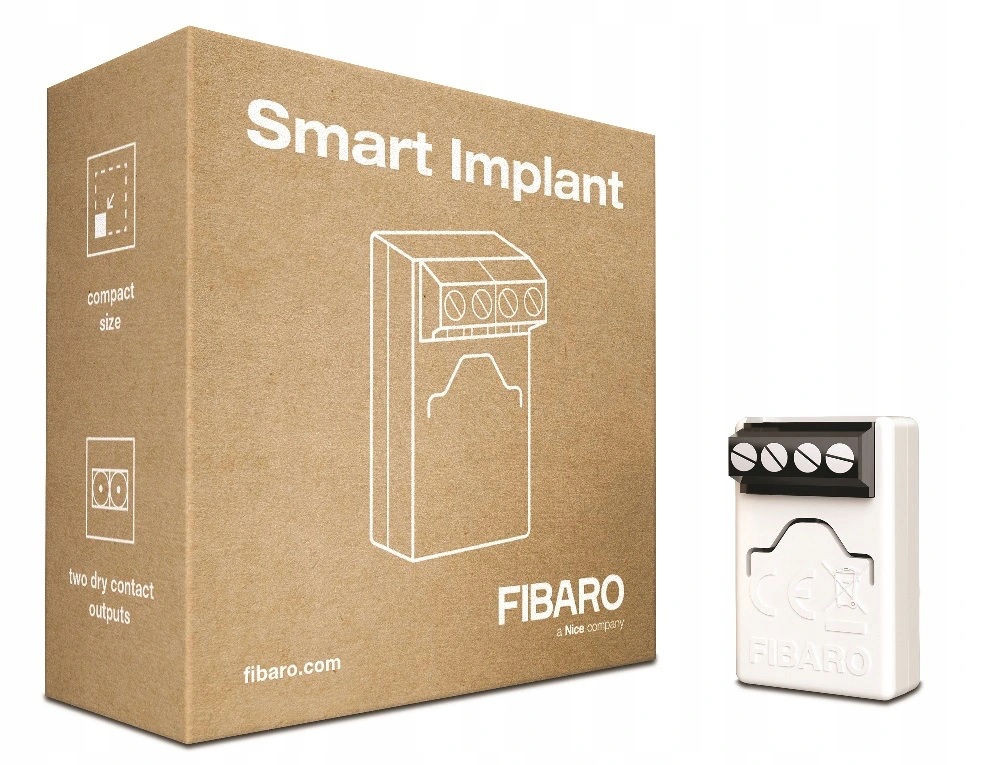
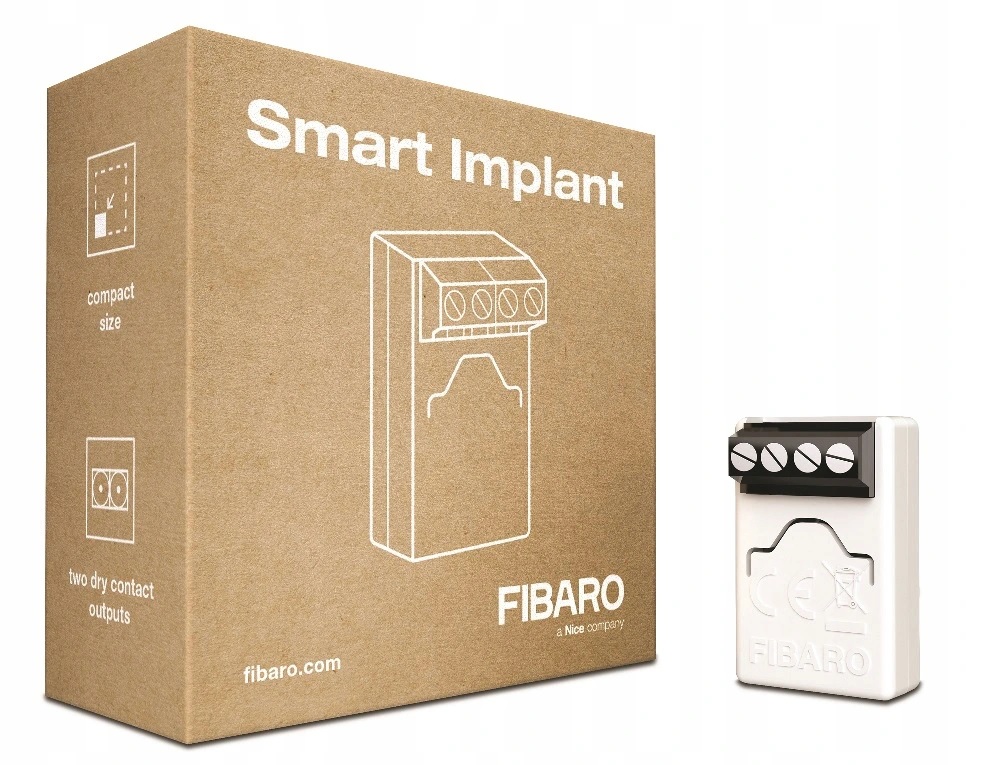
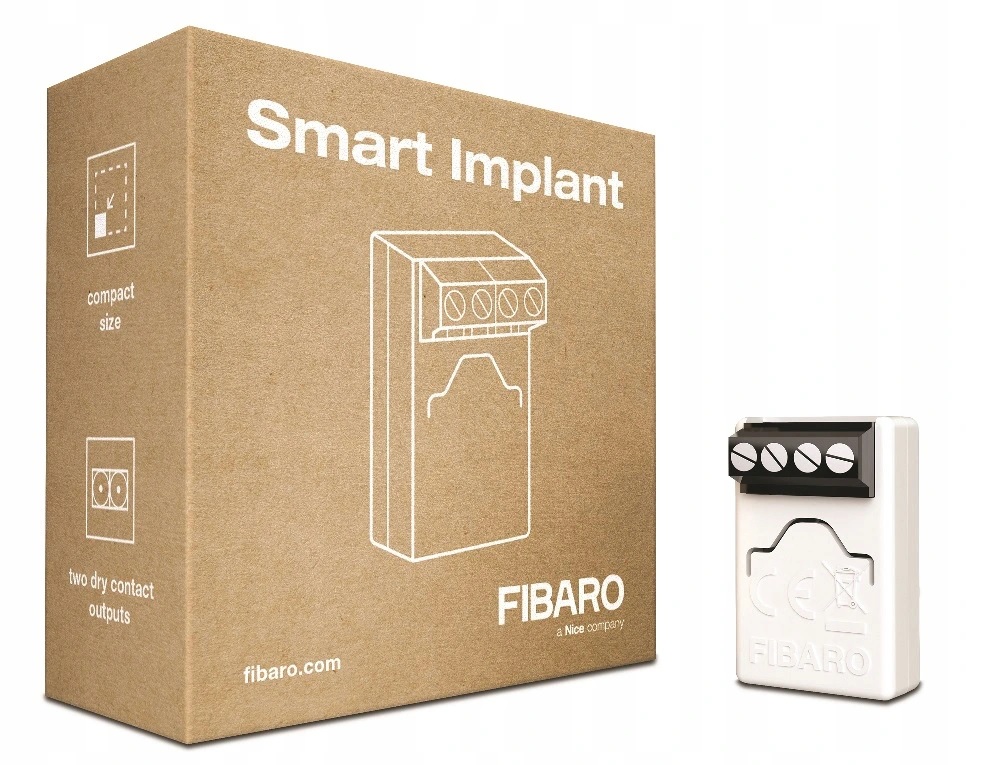
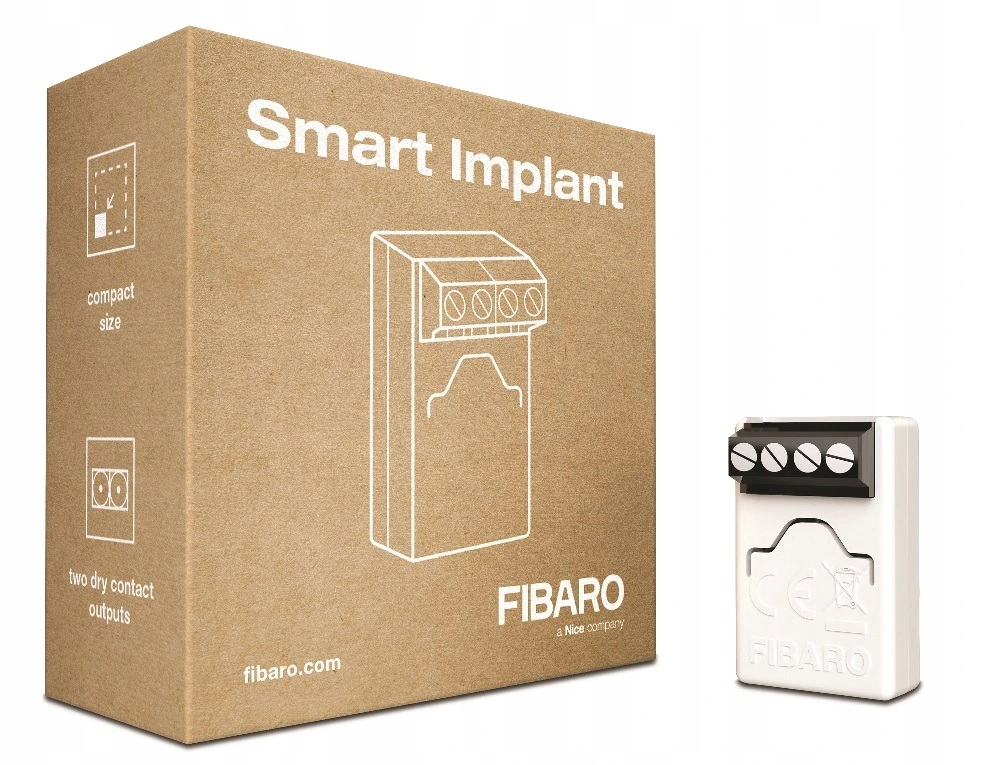
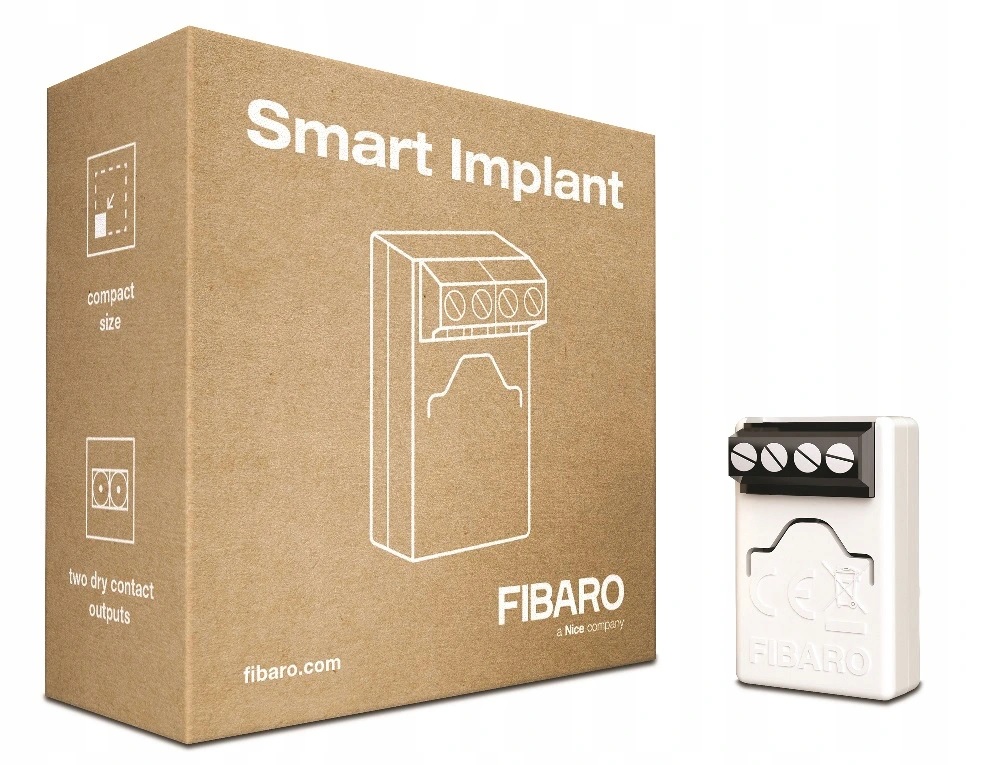
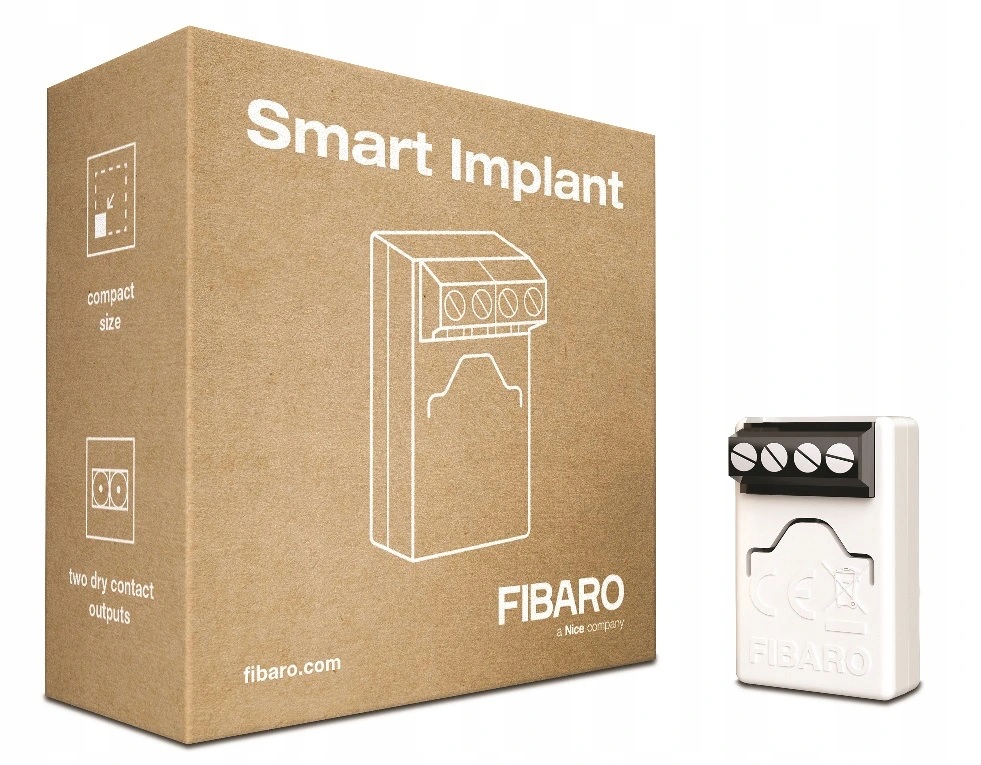
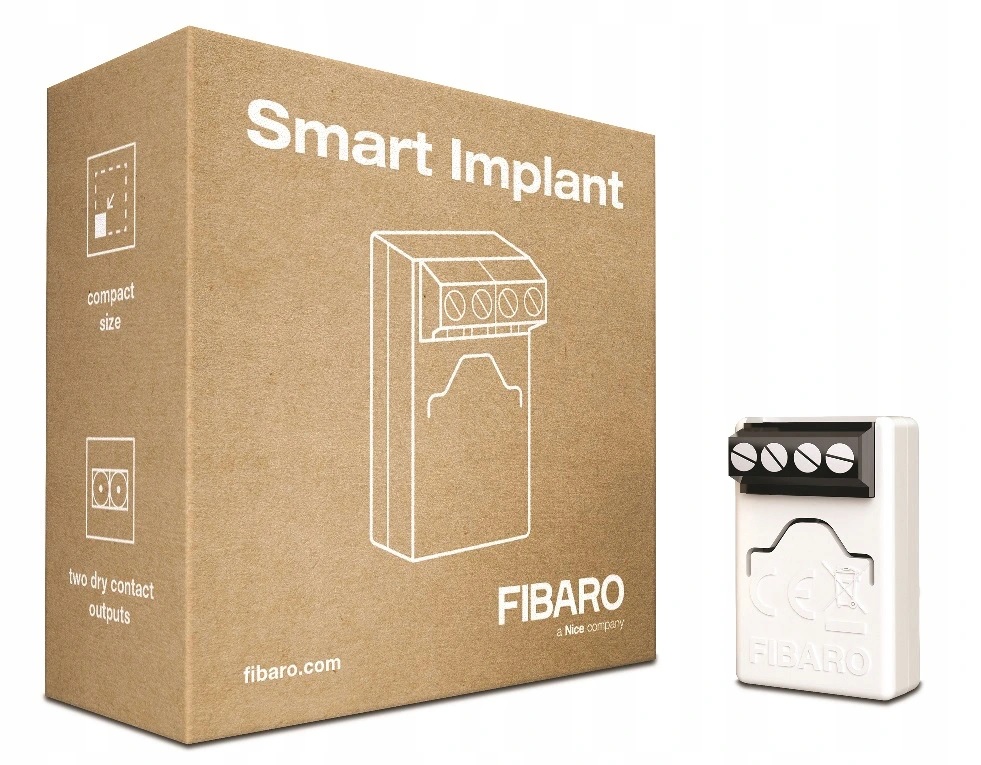
FIBARO Smart Implant allows to enhance the functionality of wired sensors and other devices by adding Z-Wave network communication. You can connect binary sensors, analog sensors, DS18B20 temperature sensors or DHT22 humidity and temperature sensor to report their readings to the Z-Wave controller. It can also control devices by opening/closing output contacts independently of the inputs. Main features: - Allows for connecting sensors: - 6 DS18B20 sensors, - 1 DHT sensor, - 2 2-wire analog sensor, - 2 3-wire analog sensor, - 2 binary sensors. - Built-in temperature sensor. - Supports Z-Wave network Security Modes: S0 with AES-128 encryption and S2 Authenticated with PRNG-based encryption. - Works as a Z-Wave signal repeater. - May be used with all devices certified with the Z-Wave Plus certificate and should be compatible with such devices produced by other manufacturers.
Want to buy adds it to your wish list and follows Fibar Group S.A. for updates. I own it adds it to your collection.
FIBARO Smart Implant allows to enhance the functionality of wired sensors and other devices by adding Z-Wave network communication. You can connect binary sensors, analog sensors, DS18B20 temperature sensors or DHT22 humidity and temperature sensor to report their readings to the Z-Wave controller. It can also control devices by opening/closing output contacts independently of the inputs. Main features: - Allows for connecting sensors: - 6 DS18B20 sensors, - 1 DHT sensor, - 2 2-wire analog sensor, - 2 3-wire analog sensor, - 2 binary sensors. - Built-in temperature sensor. - Supports Z-Wave network Security Modes: S0 with AES-128 encryption and S2 Authenticated with PRNG-based encryption. - Works as a Z-Wave signal repeater. - May be used with all devices certified with the Z-Wave Plus certificate and should be compatible with such devices produced by other manufacturers.
Hardware platform
ZM5101
Short description
FIBARO Smart Implant allows to enhance the functionality of wired sensors and other devices by adding Z-Wave network communication. You can connect binary sensors, analog sensors, DS18B20 temperature sensors or DHT22 humidity and temperature sensor. It can also control devices by opening/closing output contacts independently of the inputs.
Product identifier
FGBS-222
Countries / regions
Republic of Korea
Supports smart start
Yes
Certification number
ZC10-21057029
Radio range z wave (m)
40
Configuration parameters
Parameter Number Name Description Format Size Min Value Max Value Default Value Parameter Values 25
Supports explorer frames
Yes
Supported command classes
Identifier Name Key Version COMMAND_CLASS_FIRMWARE_UPDATE_MD_V4
Controlled command classes
Identifier Name Key Version COMMAND_CLASS_BASIC
Supported multilevel sensors
Multilevel Sensor Type Air temperature
Supported notification types
Notification Type Event / State Home Security
Value updatable by consumer by rf color value white association groups
Group Number Maximum Nodes Supported End Point ID Group Name Profile Description 1
From to description 0 0 default (out1 1st output, out2 2nd output) 1 1 reversed (out1 2nd output, out2 1st output) 24 inputs orientation this parameter allows reversing operation of in1 and in2 inputs without changing the wiring. use in case of incorrect wiring. 1 1 0 1 0 from to description 0 0 default (in1 1st input, in2 2nd input) 1 1 reversed (in1 2nd input, in2 1st input) 47 input 1 value sent to 2nd association group when activated this parameter defines value sent to devices in 2nd association group when in1 input is triggered (using basic command class). parameter is relevant only if parameter 20 is set to 0 or 1 (alarm mode). 1 2 0 255 255 from to description 0 255 value sent to devices in 2nd association group when in1 input is triggered 49 input 1 value sent to 2nd association group when deactivated this parameter defines value sent to devices in 2nd association group when in1 input is deactivated (using basic command class). parameter is relevant only if parameter 20 is set to 0 or 1 (alarm mode). 1 2 0 255 0 from to description 0 255 value sent to devices in 2nd association group when in1 input is deactivated 52 input 2 value sent to 3rd association group when activated this parameter defines value sent to devices in 3rd association group when in2 input is triggered (using basic command class). parameter is relevant only if parameter 21 is set to 0 or 1 (alarm mode). 1 2 0 255 255 from to description 0 255 value sent to devices in 3rd association group when in2 input is triggered 54 input 2 value sent to 3rd association group when deactivated this parameter defines value sent to devices in 3rd association group when in2 input is deactivated (using basic command class). parameter is relevant only if parameter 21 is set to 0 or 1 (alarm mode). 1 2 0 255 0 from to description 0 255 value sent to devices in 3rd association group when in2 input is deactivated 150 input 1 sensitivity this parameter defines the inertia time of in1 input in alarm modes. adjust this parameter to prevent bouncing or signal disruptions. parameter is relevant only if parameter 20 is set to 0 or 1 (alarm mode). 1 1 1 100 10 from to description 1 100 (10 ms 1000 ms) 151 input 2 sensitivity this parameter defines the inertia time of in2 input in alarm modes. adjust this parameter to prevent bouncing or signal disruptions. parameter is relevant only if parameter 21 is set to 0 or 1 (alarm mode). 1 1 1 100 10 from to description 1 100 (10 ms 1000 ms) 152 input 1 delay of alarm cancellation this parameter defines additional delay of cancelling the alarm on in1 input. parameter is relevant only if parameter 20 is set to 0 or 1 (alarm mode). 1 2 0 3600 0 from to description 0 0 no delay 1 3600 1 3600 s 153 input 2 delay of alarm cancellation this parameter defines additional delay of cancelling the alarm on in2 input. parameter is relevant only if parameter 21 is set to 0 or 1 (alarm mode). 1 2 0 3600 0 from to description 0 0 no delay 1 3600 1 3600 s 154 output 1 logic of operation this parameter defines logic of out1 output operation. 1 1 0 1 0 from to description 0 0 contacts normally open / closed when active 1 1 contacts normally closed / open when active 155 output 2 logic of operation this parameter defines logic of out2 output operation. 1 1 0 1 0 from to description 0 0 contacts normally open / closed when active 1 1 contacts normally closed / open when active 157 output 2 auto off this parameter defines time after which out2 will be automatically deactivated. 1 2 0 27000 0 from to description 1 27000 0.1 s 45 min, 0.1 s step 0 0 auto off disabled 156 output 1 auto off this parameter defines time after which out1 will be automatically deactivated. 1 2 0 27000 0 from to description 1 27000 0.1 s 45 min, 0.1 s step 0 0 auto off disabled 63 analog inputs minimal change to report this parameter defines minimal change (from the last reported) of analog input value that results in sending new report. parameter is relevant only for analog inputs (parameter 20 or 21 set to 4 or 5). setting too high value may result in no reports being sent. 1 1 0 100 5 from to description 1 100 0.1 10 v, 0.1 v step 0 0 reporting on change disabled 64 analog inputs periodical reports this parameter defines reporting period of analog inputs value. periodical reports are independent from changes in value (parameter 63). parameter is relevant only for analog inputs (parameter 20 or 21 set to 4 or 5). 1 2 0 32400 0 from to description 60 32400 60 s 9 h 0 0 periodical reports disabled 65 internal temperature sensor minimal change to report this parameter defines minimal change (from the last reported) of internal temperature sensor value that results in sending new report. 1 2 0 255 5 from to description 1 255 0.1 25.5°c 0 0 reporting on change disabled 66 internal temperature sensor periodical reports this parameter defines reporting period of internal temperature sensor value. periodical reports are independent from changes in value (parameter 65). 1 2 0 32400 0 from to description 60 32400 60 s 9 h 0 0 periodical reports disabled 67 external sensors minimal change to report this parameter defines minimal change (from the last reported) of external sensors values (ds18 b20 or dht22) that results in sending new report. parameter is relevant only for connected ds18 b20 or dht22 sensors. 1 2 0 255 5 from to description 1 255 0.1 25.5 units, 0.1 0 0 reporting on change disabled 68 external sensors periodical reports this parameter defines reporting period of analog inputs value. periodical reports are independent from changes in value (parameter 67). parameter is relevant only for connected ds18 b20 or dht22 sensors. 1 2 0 32400 0 from to description 60 32400 60 s 9 h 0 0 periodical reports disabled texts